The American College of the Mediterranean is proud to offer a two-year Master of Fine Arts (MFA) in Painting in Aix-en-Provence, France. The 60-credit program is conducted in English and accepts artists of diverse interests and backgrounds. The program combines daily studio work, seminars, museum studies, field studies throughout Europe and North Africa, and professional internship opportunities. Depending on the students’ interest, the first-year MFA program could be modeled either after the full-year Marchutz Core Art Program (visible world, perceptual) or after the full-year Mediterranean Core Art Program (contemporary, conceptual) or after both (a different program each semester).
PROGRAM OVERVIEW
ACM’s School of Art offers a two-year MFA degree program with a concentration in painting. The curriculum combines studio practice with liberal arts investigation, critical analysis, museum study, and field studies. The 60-credit program, conducted in English, in Aix-en-Provence, France, culminates in a Thesis Project/MFA Show which includes a public presentation of an original body of artwork.
Students are expected to participate in weekly seminars, multi-city field studies, critiques, museum studies, and liberal arts inquiry.
The MFA Program offers two distinct tracks:
Marchutz Track
This track’s mission is to develop the student’s capacity to see. The program will help students sharpen their visual perceptions of the world around them, decipher their emotional responses to these perceptions, and through a holistic (studio, historical, and critical) discipline, relate their discoveries to an intensive investigation of the nature and aim of art. Student coursework and field studies will focus on plein air painting.
Mediterranean Track
This track exposes students to the diverse histories, narrative, cultures and artistic movements of the Mediterranean Basin in Europe and Africa. The program looks at contemporary artistic practices to gain a thorough understanding of the region. The program improves students’ visual perception, and provides them with cross-cultural perspectives through painting, drawing, and ceramics.
ADMISSIONS
At ACM, we are committed to providing a seamless admissions experience for aspiring students of our graduate program. We encourage applicants to showcase their unique backgrounds and aspirations, as we value diversity and innovation in our academic community. Please refer to the application timeline below, and head to our graduate admissions page for more information.
Aug. 3, 2026
Application Available
Jan. 6, 2027
Priority Decision Deadline
May 5, 2027
Regular Decision Deadline
Program-Specific Requirements
Portfolio
Please submit a portfolio of 20 images of recent work including a minimum of 5 drawings and 10 pieces relating to your painting concentration.
- Submitting Portfolio Files: Portfolio files must be submitted using Dropbox either during the application or directly to us at admissions@acmfrance.org. If an applicant does not already have an account, one can be created for free at www.dropbox.com. To submit these files, create a new folder named LastName.FirstName_MFAApplication and add all portfolio-related files. Images should be submitted as JPEG’s no larger than 1 MB each (approximately 1400 pixels in either direction at a resolution of 100 dpi). Please format image files: LastName.FirstName_1.jpg – LastName.FirstName_20.jpg.
- Click “share” from the Dropbox menu to generate a link. Send this link to admissions@ACMFrance.org with the subject line: MFA Application Files for Lastname.FirstName.
- NOTE: Dropbox preserves the time of each folder’s last modification, and after sharing the folder link with ACM, we ask that no further changes are made in the MFA Application folder.
Writing Sample
The writing sample can be an academic paper, essay, or journal that you have previously written for a course during your undergraduate studies. Its purpose is to review your ability to analyze a specific topic in culture and/or history, a work of art, etc. It acts as a sample of your academic writing skills.
Two letters of recommendation
The MFA application requires two letters of recommendation, and one must be from a professor. For more details on letters of recommendation, please refer to the graduate admissions page.
Meeting with Dean of ACM's School of Art
Upon submission of the application, the applicant will meet with Yumna Masarwa, Dean of the ACM School of Art for further discussion.
ACADEMICS
Program Objectives & Learning Outcomes
The Master of Fine Arts at ACM is a two-year graduate program rooted in the artistic traditions and contemporary practices of the Mediterranean region. With a concentration in painting, the program combines rigorous studio work with liberal arts inquiry, critical theory, and professional development. Students refine their personal artistic voice while engaging with artists, curators, and institutions across Europe and North Africa.
Upon successful completion of the MFA, students will be able to:
- Create a sustained and original body of artwork through advanced studio practice and critical reflection
- Integrate perceptual and conceptual approaches to art-making informed by historical, contemporary, and cross-cultural perspectives
- Demonstrate advanced visual analysis and art historical knowledge through engagement with museums, critiques, and field studies across the Mediterranean
- Participate in critiques, seminars, and mentorship to support the development of individual artistic practice and research.
- Produce professional materials—including an artist statement, CV, and portfolio—demonstrating readiness for careers in the visual arts
- Apply practical experience gained through internships and mentorships to navigate the broader art world and creative industries
Program Structure
The MFA program, both the Marchutz and Mediterranean Tracks, consists of four semesters and a January Term with 60 credits total, as described below:
Marchutz Track
- The Master’s Forum, ART 515 (3 credits)
- 1 Art History course (3 credits)
- 1 French course (3 credits)
- Drawing I, ART 501 (3)
- Critical Studies I, ART 509 (3 credits)
- Painting I, ART 630 (3 credits)
As part of their degree requirement, MFA candidates must enroll in a January-Term program (3 credits). They may select from the list of options provided in the MFA course section.
- 1 Art History course (3 credits)
- 1 French course (3 credits)
- Drawing II, ART 502 (3 credits)
- Critical Studies II, ART 510 (3 credits)
- Painting II, ART 632 (3 credits)
- Painting III (ART 633, 3 credits)
- Critical Studies III (ART 511, 3 credits)
- Elective (3 credits)
- Arts and Cultural Leadership (ART 527, 3 credits)
- Painting IV (ART 634, 4 credits)
- Thesis Project, Exhibition (ART 750, 5 credits)
- Elective (3 credits)
Mediterranean Track
- The Mediterranean Seminar I, ART 518 (3 credits)
- Altered Landscapes I: A Mixed Media Studio Course, ART 592 (3 credits)
- Drawing & Painting in the Mediterranean I, ART 593 (3 credits)
- The Master’s Forum (ART 515, 3 credits)
- 1 Art History course (3 credits)
- 1 French course (3 credits)
As part of their degree requirement, MFA candidates must enroll in a January-Term program (3 credits). They may select from the list of options provided in the MFA course section.
- The Mediterranean Seminar II, ART 519 (3 credits)
- Altered Landscapes II: A Mixed Media Studio Course, ART 594 (3 credits)
- Drawing & Painting in the Mediterranean II, ART 595 (3 credits)
- 1 Art History course (3 credits)
- 1 French course (3 credits)
- Painting III (ART 633, 3 credits)
- Critical Studies III (ART 511, 3 credits)
- Elective (3 credits)
- Arts and Cultural Leadership (ART 527, 3 credits)
- Painting IV (ART 634, 4 credits)
- Thesis Project, Exhibition (ART 750, 5 credits)
- Elective (3 credits)
J-TERM
January Term (J-Term) at the American College of the Mediterranean takes place between the fall and spring semesters and offers a unique opportunity for students to immerse themselves in an intensive 2-3 week traveling seminar with hands-on learning experiences and cultural excursions that complement their studies. To satisfy their J-Term program requirement, MFA students must enroll in one of the options listed below. Prior to selecting a J-Term program, students must consult with their school dean and advisor.
Mediterranean Basin
The Mediterranean Basin January Term Traveling Seminar is designed for students interested in an academic and cultural experience in Greece and Italy:
- Build visual literacy in the history of art and archaeology as well as examine philosophical literature of the Mediterranean Basin from Antiquity to the Middle Ages
- Synthesize cultural, historical, political, and social information as it relates to the visual arts
- Engage with academic experts from IAU in addition to local guides and faculty in the fields of history, art history, and archaeology
- Explore and appreciate the diverse cultures of the countries in which we travel – experience the stunning classical architecture of Greece, enjoy renaissance art in Italy, visit historical sites and museums, eat at local restaurants, and meet local residents
Theatre Alive
This seminar course examines the complex relationship between London (a major urban center) and the art, industry, and practice of performance and drama London is a diverse and historied city, which makes it a brilliant site for this course:
- Read plays, and use field work (museums and galleries, backstage tours, live performance, historic sites) to add relevance and cultural context to our in-class discussions about theatre
- Develop an understanding of the way theatre, ballet, and visual art provide narratives and events that support the status quo or actively questions, disrupts, or overturns the narratives of dominance is central to an understanding of the cultural necessity for the free voice of arts to a society or culture
- Learn about class and gender, and the ways in which theatre engages with and represents these systems
- Explore and appreciate the diverse cultures of England – visit historical sites and museums, eat at local restaurants and experience the tradition of afternoon tea, and meet local residents
TUITION AND AID
We strive to make education accessible and affordable for all students. Our Tuition and Aid section provides comprehensive information on the costs associated with your education, including tuition rates, fees, and available financial aid options. We offer a variety of scholarships and grants to help alleviate the financial burden, ensuring that every student has the opportunity to pursue their academic goals. For detailed information on tuition rates and financial aid applications, please visit our dedicated resources page.
Year 1
|
MFA 2026-2027 |
Fall 12-18 Credits |
Spring 12-18 Credits |
Academic Year Total |
|---|---|---|---|
| Tuition | $16,500 | $16,500 | $33,000 |
| Program Fee | $2,500 | $2,500 | $5,000 |
| Housing & Student Life Fee | $5,500 | $5,500 | $11,000 |
| Total | $24,500 | $24,500 | $49,000 |
Year 2
|
MFA 2027-2028 (Estimated) |
Fall 12-18 Credits |
J-Term 3 Credits |
Spring 12-18 Credits |
Academic Year Total |
|---|---|---|---|---|
| Tuition | $17,325 | $3,950 | $17,325 | $38,600 |
| Program Fee | $2,800 | $2,800 | $5,600 | |
| Housing & Student Life Fee | $5,800 | $5,800 | $11,600 | |
| Total | $25,925 | $25,925 | $55,800 |
J-Term cost includes all activities, intra-program transportation, some meals, and program location lodging.
Student Life Fee (for students in approved non-program housing):
- Semester: $2,200
- Summer: $1,000
Operational costs are sometimes affected by factors over which ACM has no control. Therefore, the charges and financial aid policies quoted on our website and in the catalog are subject to change without notice.
SCHOLARSHIPS
The American College of the Mediterranean (ACM) offers several scholarships, grants, and work-study opportunities to its students each year. ACM strives to keep its published costs low, especially in comparison to many U.S.-based degree-granting institutions. Additional funding is provided for those who qualify for merit, diversity, and need-based awards.
If you are planning to apply for aid, you will need to submit the required materials along with your program application, as ACM reviews both simultaneously on a rolling admissions basis. To be eligible for ACM scholarships and grants, students must be enrolled full-time and abide by all ACM policies and regulations as stated on the policies page. Please contact admissions@acmfrance.org with any questions.
HOUSING
Students in the MAAH program can choose to live in program housing or non-program housing for the duration of their program. However, all recipients of Partner Pathway, Graduate Fellowship or Presidential Scholarships must live in program housing for the duration of their academic program.
CAREER PATHS
Graduates are well-versed in both the practical and theoretical aspects of media studies via field studies, and special topics courses. Moreover, the chance to study across multiple countries, including France, Spain, Morocco, and other locations throughout the Mediterranean, offers students an enriched understanding of intercultural dynamics and a broader perspective on global communication trends, setting them apart in their professional endeavors.
FACULTY
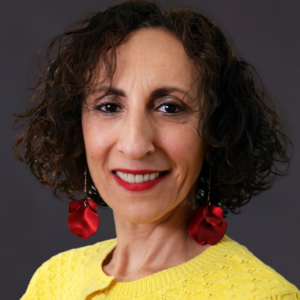
Yumna Masarwa, PhD
Dean, The School of Art
Based at the Aix-en-Provence Campus
Dr. Masarwa joined IAU in September 2013 and has a B.A. in Archaeology and History from Ben-Gurion University (Israel), a Teaching Certificate, and M.A and Ph.D degrees in Art & Archaeology from Princeton University. She taught at several academic institutions in the U.S. and France such as Princeton University, INALCO Paris (Institut National des langues et Civilisations Orientales), Parsons Paris, CIEE Paris (Council on International Educational Exchange), and at Paris College of Art. She teaches various courses on Islam and Islamic art. Her research combines written sources (religious, historical, geographical etc.) with material culture. Since 2018, Dr. Masarwa has been conducting ethnographic research on the Algerian community in Marseille. She has published several articles in peer-reviewed journals and is currently working on her book manuscript.