The Master of Arts in French Studies (MAFS) at The American College of the Mediterranean is a one-year program that offers students the unique opportunity to earn an American MA degree in French. Situated in Aix-en-Provence near the Mediterranean coast, ACM’s program unites mainland French with the Francophone countries of North Africa, ensuring that students are exposed to the rich diversity of the French language and culture. The MA in French Studies prepares students for a variety of public and private careers in the international sector and provides them with a foundation to continue their education at the doctoral level. Upon completion, graduates of the program will have the capability and tools to teach French in colleges and universities or they may pursue careers in business or government agencies.
PROGRAM OVERVIEW
Candidates for the MA in French Studies can choose to specialize in one of the following tracks:
French and International Studies (FIS)
French language for use in international contexts in both the public and private sectors
The Francophone World (FW)
Study concentrated on the French language as it is used in other French-speaking countries (North Africa, Central Africa, the Caribbean)
Contemporary French Literature (CFL)
Traditional curriculum with a focus on more avant-garde literature
Teaching French as a Foreign Language (TFFL)
Practicum and analysis
In keeping with ACM’s commitment to interdisciplinarity, each of these tracks allow students access to courses in related disciplines such as Art, International Relations, Literature Political Science, History, or Sociology. All students, regardless of their track, are required to take the Master’s Seminar, a January Term Traveling Seminar, the Research Methodology for Thesis Preparation course, and participate in an internship.
ADMISSIONS
At ACM, we are committed to providing a seamless admissions experience for aspiring students of our graduate program. We encourage applicants to showcase their unique backgrounds and aspirations, as we value diversity and innovation in our academic community. Please refer to the application timeline below, and head to our graduate admissions page for more information.
Students admitted to the MAFS must have completed a bachelor’s degree or its equivalent (120 units of academic credit) with some proficiency in French. International experience and/or knowledge of other cultures is highly recommended for admission into the program. For international applicants who completed their course of study in any language other than English, a minimum TOEFL score of 79 is required.
Aug. 3, 2026
Application Available
Jan. 6, 2027
Priority Decision Deadline
May 5, 2027
Regular Decision Deadline
Program-Specific Requirements
Applicants to the MAFS program must demonstrate academic proficiency in French (B2 level or beyond) through:
- French language placement exam
- Completion of application personal statement in French
- Meeting with the Associate Dean of the Centre d’Études Françaises to demonstrate oral proficiency in French
ACADEMICS
Program Objectives & Learning Outcomes
Upon successful completion of the MAFS, students will:
- Attain near-native fluency in spoken and written French suitable for academic, pedagogical, or professional contexts.
- Conduct original research in French language, literature, and culture, demonstrating critical awareness of historical, political, and social frameworks.
- Analyze the cultural production of the Francophone world—including literature, film, and art—through comparative, interdisciplinary perspectives.
- Produce scholarly and creative work that reflects intercultural competence and intellectual rigor.
- Engage in reflective and ethical dialogue about identity, migration, and social change across the Francophone world.
- Demonstrate the ability to teach, translate, or communicate across cultures using advanced linguistic and cultural knowledge.
Program Structure
All candidates will enroll in four 500-level courses: The Master’s Seminar (4 credits), an internship (3 credits) related to their chosen track, and two courses (6 credits) from the following fields, according to their selected track:
- Linguistics
- French Society and Political Structures
- Second Language Acquisition and Usage
- Language Translation
- International Relations
- North Africa and Colonial History
- Francophone Literature
To satisfy their degree requirement, all MAFS students must enroll in one January Term program, which is a multi-country traveling seminar, many of which explore the France and the Francophone World. All students will participate in a January Term Seminar from the MAFS course list section.
All candidates will enroll in the Master’s Seminar (4 credits), the Research Building and Methodology for Thesis course (3 credits), and three courses (9 credits) from the following fields, according to their selected track:
- Linguistics
- Discursive and Creative Writing in French
- Second Language Acquisition and Usage
- Language Translation
- European History
- Literature and Popular Culture
Students in their final semester will choose a subject and advisor for the Final Research Thesis Project to pursue over the summer term. The candidate’s thesis will be supervised by their faculty advisor with additional oversight from the French department. Oral defense of the thesis will be conducted in front of the MA in French Studies committee at the end of the summer term.
Thesis
During the first two weeks of the second semester, candidates will determine a thesis topic they will submit at the end of the term/year. The subject will be determined in collaboration with an advisor from the French department. Students must successfully defend their thesis to the MA in French Studies Committee in an oral presentation to obtain their degree.
Core Courses
- FRE 588: Master’s Seminar: Critical Thought
- FRE 589: Master’s Seminar: Methodologies
- FRE/LIT 511: Cultural Approach of The Other (Literature, Art and Experiences of New Cultural Spaces in Aix-en-Provence and the surrounding area)
- FRE/LING 512: Contemporary French: The Linguistics of Everyday Language
- FRE 501: Translation and Structure I: From Colloquial to Literature
- FRE/LIN 579: Deep Dive into the French Language
- FRE/LIT 540: French Children’s Literature: Exploring Language, Culture, and
- FRE/LIT 562: Women and the Mediterranean: From Myth to Modernity
- FRE 570/571: Translation and Publishing: Workshop
- FRE/POL 576: Contemporary French Identities
- FRE/POL 517: Dissent in the Mediterranean, from Albert Camus to Leila Slimani
- HIS/FRE 544: Provencal History Through its Monuments
- ART 520: Picasso, Matisse, and the Mediterranean
- ART 582: Cézanne and Van Gogh
- BUS 503: Intercultural Management
- HIS 501: European History: 1870-1918
- HIS/IRL/POL 521: Contemporary Politics of the Middle East
- IRL/POL 503: International Relations
- IRL/COM 516: Media and Conflict
- PHI/POL 512: Political Ethics
- POL/IRL 508: Geopolitics of the Mediterranean Basin: Security in a Diverse Region
- LIT 525: The European Novel
- FRE 541/543: Internship
- FRE 542: Research Building and Methodology
- FRE 599: Final Research Thesis
J-TERM
January Term (J-Term) at the American College of the Mediterranean takes place between the fall and spring semesters and offers a unique opportunity for students to immerse themselves in an intensive 2-3 week traveling seminar with hands-on learning experiences and cultural excursions that complement their studies. To satisfy their J-Term program requirement, MAFS students must enroll in one of the options listed below. Prior to selecting a J-Term program, students must consult with their school dean and advisor.
Europe and the Islamic World
As part of the Europe and the Islamic world January Term program, students participate in a series of briefings from leading academic, literary, and political experts on the European relationship with the Islamic world. In each city, students attend daily lectures and meetings with distinguished scholars from ACM in addition to local guides and experts in the fields of politics, art history, history, and culture. Special emphasis is placed on the importance of immigration to Europe and its current socio-cultural implications on the region. Course options are as follows:
- Art History 595: Classical Islam and the European Renaissance
- Cross-Cultural Studies 595: Jews, Muslims and Christians in Europe and the Islamic World
- French 595: Cultural History of France and the Islamic World
- History 595: Cultural History of Europe and the Islamic World
- Political Science 595: European Politics and the Islamic World
- Religious Studies 595: Jews, Muslims and Christians in Europe and the Islamic World
Great Cities
As part of the Great Cities January Term program, students explore major cities across Europe using literature and the arts as a guide to understanding the rise and establishment of the urban setting. Through readings and media studies, students examine the artistic process from inspiration to creation. Site visits and guided tours then allow students to experience the historical, geographical, and demographic foundations that inform the fictional representations of European cities and their impact on perceptions of those cities today. Students can learn from and exchange their observations with experts from ACM as well as distinguished on-site scholars and local guides to frame their own perception of the cities and these cities’ representation through the arts. Course options are as follows:
- European Studies 503: Europe and the Urban Space
- Anthropology 501: The Artist and the City
- Literature 575: The European City in Literature
- Communications 575: The European City in the Visual Arts
- Geography 501: Europe and its Cities
TUITION AND AID
We strive to make education accessible and affordable for all students. Our Tuition and Aid section provides comprehensive information on the costs associated with your education, including tuition rates, fees, and available financial aid options. We offer a variety of scholarships and grants to help alleviate the financial burden, ensuring that every student has the opportunity to pursue their academic goals. For detailed information on tuition rates and financial aid applications, please visit our dedicated resources page.
| 2027-2028 |
Fall 12-18 Credits |
J-Term 3 Credits |
Spring 12-18 Credits |
Summer 6 Credits |
Academic Year Total |
|---|---|---|---|---|---|
| Tuition | $17,325 | - | $17,325 | $8,610 | $43,260 |
| Program Fee | $2,800 | - | $2,800 | $1,550 | $7,150 |
| Housing & Student Life Fee | $5,800 | - | $5,800 | $2,500 | $14,100 |
| Total | $25,950 | $3,950 | $25,925 | $12,660 | $68,460 |
For 2027-2028:
Commitment Fee (due upon admission): $500
January Term Program Fee (3 Credits): $3,950
*All ACM students are required to complete one January Term course as a graduation requirement. This fee applies to the year in which students participate.
**Housing and Student Life Fee: Housing, Orientation, 24/7 Emergency Assistance, On-Site Support, Wellness Support. Meal inclusions may be provided by location and housing type
***Program Fee: On-Site Activities, Study Tours, Pre-Departure Advising, International Insurance, Administrative Costs
Student Life Fee (for students in approved non-program housing): $2,200
*This fee is in lieu of the above stated Housing & Student Life Fee
- Semester: $2,200
- Summer: $1,000
SCHOLARSHIPS
The American College of the Mediterranean (ACM) offers several scholarships, grants, and work-study opportunities to its students each year. ACM strives to keep its published costs low, especially in comparison to many U.S.-based degree-granting institutions. Additional funding is provided for those who qualify for merit, diversity, and need-based awards.
If you are planning to apply for aid, you will need to submit the required materials along with your program application, as ACM reviews both simultaneously on a rolling admissions basis. To be eligible for ACM scholarships and grants, students must be enrolled full-time and abide by all ACM policies and regulations as stated on the policies page. Please contact admissions@acmfrance.org with any questions.
HOUSING
Students enrolled in the MAFS program must reside in program housing for at least one semester. Language development coupled with an immersive experience with the local culture is critical to student success in the MAFS.
CAREER PATHS
The MAFS prepares students for various careers in both the public and private sectors in an international environment: careers in business, diplomacy, or translation; it allows a bridge with other specializations such as Global Health in French-speaking African countries or with highly specialized training in French-speaking countries (for example sustainable development and ecology, or other social sciences). Finally, it can also provide students with the necessary skills to teach French in American schools or private institutions in France and French-speaking countries and further prepare them to pursue higher education at the doctoral level.
FACULTY
ACM faculty is comprised of experts in the field of French studies, linguistics, translation, literature, language acquisition, political science, art history and more. Both academics and professionals in their field, ACM faculty provide the MAFS the academic depth and the real-life experience necessary for a well-rounded French Studies education.
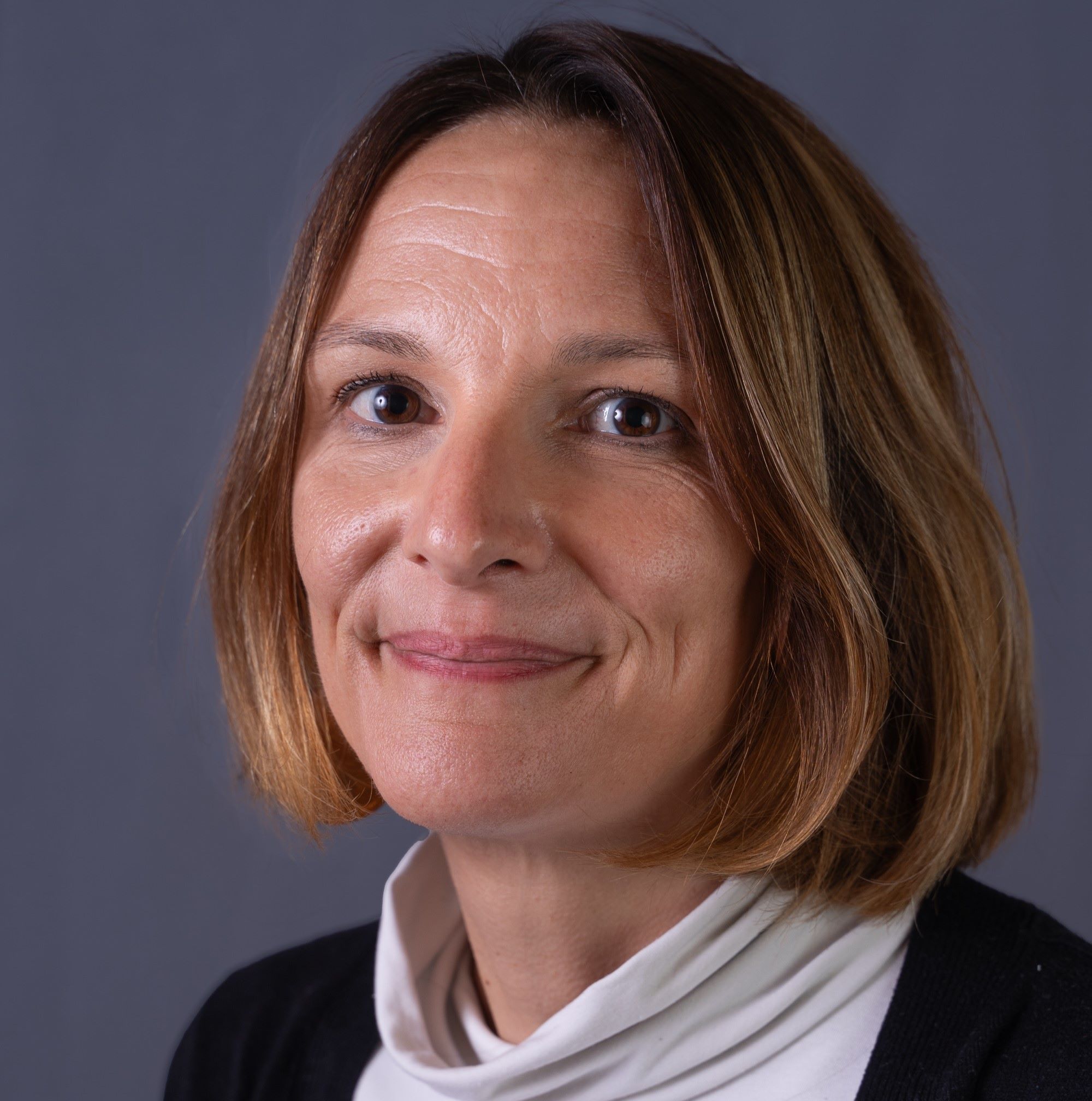
Aurore Guitry, PhD
Associate Dean, The Centre d’Études Françaises
Based at the Aix-en-Provence Campus
Dr. Aurore Guitry is the Associate Dean of the Center for French Studies. She was the Coordinator from 2022-2026. She is a writer, translator, and Professor of literature, French and translation at ACM since 2016. She holds a Master in Literature (Women and imagination in Shakespeare’s plays: King Lear, Richard III and Macbeth), and a PhD in creative writing from Aix-Marseille University. She has written six novels, some of which are translated into Italian, German and Russian. Her work and research explores the problem of identity and the relation between text and image. As a ghostwriter, she wrote several biographies for politicians or business figures. She has also translated a dozen American novels, biographies, art books, etc. She is fluent in French and English and speaks Thai.